
Door Supervisor Refresher Course Overview
The Door Supervisor Refresher course runs over 2 days. Learners also gain 12 months of access to online materials after attending, making it easy to revisit key topics whenever needed.
Accreditation
You will achieve the Highfield Level 2 Award for Door Supervisors in the Private Security Industry (Refresher). Anyone renewing their SIA Door Supervisor Licence must complete this refresher training to remain compliant.
Why Take the Door Supervisor Refresher Course?
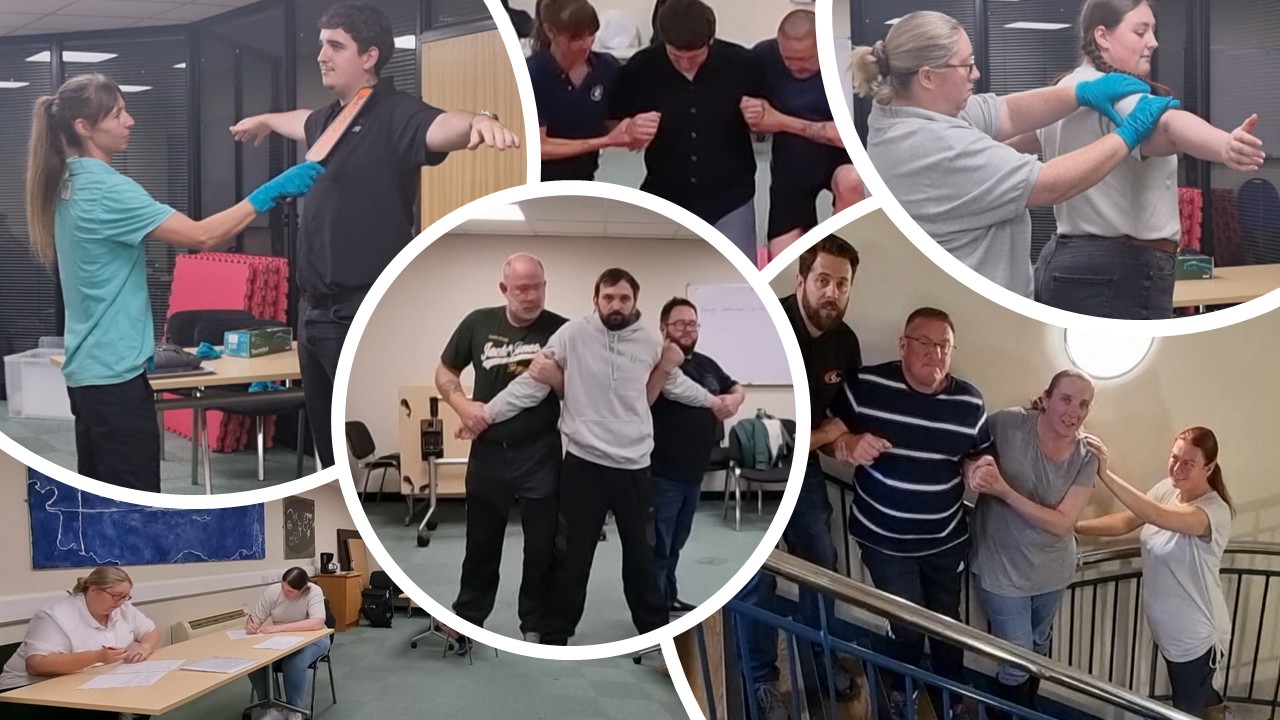
Renewing your licence is more than a requirement — it keeps your skills current and ensures you meet industry standards. The course covers conflict management, situational awareness, and physical intervention skills. These skills prepare you for modern security challenges and increase your confidence on the job.
Recommended Timing
We recommend completing the Door Supervisor Refresher around 6 months before your licence renewal date. By acting early, you avoid last‑minute stress and maintain continuous eligibility to work.
Door Supervisor Refresher Assessment
You will complete multiple‑choice exams and practical assessments. This balanced approach tests both your knowledge and your ability to apply skills in real situations.
Legal Requirement
All Door Supervisors renewing their SIA Licence must complete approved SIA Refresher Training for Door Supervisors. Without this training, you cannot continue working in the private security industry.
The course ensures you understand updated risks and meet the legal requirement for Emergency First Aid at Work (EFAW) knowledge.
Please note that the Door Supervisor Refresher course does not include first aid training. Learners must hold a minimum of a valid Emergency First Aid at Work (EFAW) certificate with at least 12 months remaining before attending.
**You will need to provide a copy of your First Aid Certificate**
If your certificate is due to expire or you do not currently hold one, you can complete the required first aid qualification with us on a separate course.
This ensures you remain fully compliant with SIA regulations and prepared for licence renewal.
Our Training Venue
Our courses are usually held at Acorn House, Lindum Business Park in North Hykeham, Lincoln, giving you a professional and welcoming place to learn. If it’s easier for your team, we can also bring the training to your own site when booked as a block session. This way, you get the same high‑quality learning experience in a familiar setting, with the added convenience of keeping your staff together.
Booking Information
When booking your place on the course, please ensure you confirm your chosen dates of attendance. This helps us allocate spaces effectively and provide you with the best learning experience.
Ready to renew your SIA Door Supervisor Licence?
If you also need Emergency First Aid at Work (EFAW), book both courses together today. Completing the EFAW alongside your Door Supervisor Refresher ensures you meet all legal requirements, refresh essential skills, and stay fuly compliant with industry standards. Secure your place now and continue working confidently in the private security sector
Curriculum
- 8 Sections
- 47 Lessons
- 52 Weeks
- Unit 1 - LO1 - Know how to conduct effective search procedures30 mins11
- 1.1Why do we have to conduct search training?1 Minute
- 1.2LO1.1 – What of search’s could door supervisors carry out3 Minutes
- 1.3LO 1.2 – Identify a door supervisor’s right to search2 Minutes
- 1.4LO1.3 – Identify the different types of searching equipment2 Minutes
- 1.5LO1.4 – Recognise possible hazards when conducting a search3 Minutes
- 1.6LO1.5 – State the precautions to trake when carrying out a search.5 Minutes
- 1.7LO1.6 State the actions to take if an incident or an accident occurs.3 Minutes
- 1.81.7 Demonstrate how to search people and their personal possessions3 Minutes
- 1.9LO1.8 Identify the reasons for carrying out a premises search.3 Minutes
- 1.10LO1.9 – LO1.11 Recognise actions to take in the event of a search refusal.9 Minutes
- 1.11Knowledge Check DSR Search Procedures10 Questions
- Unit 1 - LO2 - Understand how to keep vulnerable people safe1 hour 50 minutes8
- 2.1LO2.1 – Recognise duty of care with regard to vulnerable people1 Minute
- 2.2LO2.2 – Identify factors that could make someone vulnerable7 Minutes
- 2.3LO2.3 – Identify actions that the security operative should take towards vulnerable individuals3 Minutes
- 2.4LO2.4 – Identify behaviours that may be exhibited by sexual predators2 Minutes
- 2.5LO2.5 – Identify indicators of abuse3 Minutes
- 2.6LO2.6 – State how to deal with allegations of sexual assault2 Minutes
- 2.7LO2.7 – State how to deal with anti-social behaviour
- 2.8Understand how to keep vulnerable people safe – Knowledge Check11 Questions
- Unit 1 - LO3 Act Awareness eLearning1
- Unit 1 - LO4 - Know how to safeguard the public from incidents of spiking8
- 4.14.1 State methods of spiking
- 4.24.2 State the law in relation to spiking
- 4.34.3 State indicators that drinks have been spiked
- 4.44.4 Identify behavioural signs of an individual attempting to spike drinks
- 4.54.5 Identify situations when an individual might be at high risk of spiking
- 4.64.6 State actions door supervisors and/or venues may take to prevent incidents of spiking
- 4.74.7 Recognise indicators that suggest an individual may have been spiked
- 4.84.8 State how to manage a spiking incident
- Unit 2 - LO2 - Know the implications of physical interventions and their use5
- 5.11.1 State the legal implications of using physical intervention16 Minutes
- 5.21.2 State the professional implications of using physical intervention6 Minutes
- 5.31.3 Identify positive alternatives to physical intervention3 Minutes
- 5.41.4 Identify the differences between defensive physical skills and physical interventions1 Minute
- 5.5DS Refresher LO2.1 Knowledge Check13 Questions
- Unit 2 - LO2 - Know the risks associated with using physical intervention3
- Unit 3 - LO3 - Know how to reduce the risks associated with physical intervention8
- 7.13.1 State the specific risks of dealing with physical intervention incidents on the ground7 Minutes
- 7.23.3 Identify ways of reducing the risk of harm during physical interventions5 Minutes
- 7.33.4 Identify the benefits of dynamic risk assessment in situations where physical intervention is used4 Minutes
- 7.43.5 State how to manage and monitor a person’s safety during physical intervention3 Minutes
- 7.53.6 State the responsibilities of all involved during a physical intervention2 Minutes
- 7.63.7 State the responsibilities immediately following a physical intervention3 Minutes
- 7.73.8 State why it is important to maintain physical intervention knowledge and skills2 Minutes
- 7.8DS Refresher LO3 Knowledge Check11 Questions
- Acute Behavioral DisturbanceThis unit will be delivered in the class room. On completition of the course you will be given access to an eLearning module to refresh your knowledge at your leisure.9
- 8.1E1 – Acute Behavioral Disturbance Introduction, Aims & Objectives2 Minutes
- 8.2E2 – What is Acute Behavioural Disturbance5 Minutes
- 8.3E3 – ABD Video Insert2 Minutes
- 8.4E4: Acute Behavioural Disturbance & California3 Minutes
- 8.5E5: California New Reel2 Minutes
- 8.6E6: Signs, Symptoms & Diagnosis3 Minutes
- 8.7E7: KXLY News3 Minutes
- 8.8E8 – Management of ABD7 Minutes
- 8.9A.B.D. Knowledge & Understanding DS Refresher15 Minutes8 Questions

Requirements
- either SIA Door Supervison Licence
- or SIA Close Protection Licence
- Emergency First Aid at Work Certificate (This can be completed with us)
Features
- Terror Threats and the role of a security operative in the event of a threat
- Actions to take in relation to global (or critical) incidents
- Physical interventions and the implications of their use
- How to reduce the risks associated with physical intervention
- How to conduct effective search procedures
- Factors that can make someone vulnerable
- Understanding a security operatives' duty of care with regards to vulnerable people
- Safeguarding techniques in relation to spiking
Target audiences
- Security
- SIA
- Door Supervisor
- Close Protection